All posts by naltneu

Butterflies, did you know…?

MonarchButterflyDid you ever watch a caterpillar turn into a butterfly? I think it is amazing how they metamorphose from having no wings to having brightly colored ones. One of the most beautiful butterflies is the monarch butterfly, pictured above with its orange and black wings. They are famous for making a very long annual journey, about 3,000 miles, from Canada to central Mexico each winter. Each delicate butterfly travels 50-100 miles per day, despite weighing much less than half an ounce or one gram. Their wingspan is about 3-4 inches long or 9-11 centimeters. Can you imagine being that small and traveling so far? In comparison, the average human weighs over 100 pounds and stands more than 5 feet tall. And we do not have to use our arms to fly; instead, we jump on planes and make long journeys.

Many people delight in the annual migration of the monarch butterfly. They say it is amazing to see the blanket of orange and black when they arrive in Mexico. Millions of monarchs used to make the long trip between countries. Unfortunately, their numbers have dwindled dramatically due to climate change, herbicides such as Roundup, forest logging, and the lack of food. Monarch butterflies rely on a plant named milkweed. I know, the name “milkweed” does not sound nice to some of you. However, it is actually very pretty with small pink-purple flowers. Milkweed used to be abundant in the United States, however, has become scarce because of a government mandate for biofuel. That mandate pushed farmers to set aside less land for wildlife.

You can help monarch butterflies by planting milkweed, butterfly bushes, zinnias, cosmos, and making sure your garden is butterfly friendly. Or you can encourage your state and local governments, and the Federal Highway Administration to plant milkweed and flowering plants, instead of grass, along the roadside.

Hemp, the perfect plant?

I was aHempt the grocery store a couple of weeks ago and ate a sample of hemp seeds. Then I said to myself, what am I eating that costs $20.00 per pound? Well, I ate the seeds of a highly nutritious plant. Sadly, the U.S. federal government has not legalized hemp’s growth, production or planting. Why? That is a good question. Hemp could significantly help to heal the planet and be good for U.S. economy. So, why is hemp good? Hemp’s impact strength is ten times stronger than steel; in fact, Henry Ford used it to make a Model T car. Plus, European car plants are now making car part panels from hemp based composites. The panels are half the weight, bio-degradable, and safer than fiberglass ones.

Hemp is also great for your health. It is easily digested and provides 10 essential amino acids, 4 fatty acids and over 30% protein. And hemp oil keeps your skin from getting dry.

Here are other reasons to like hemp. It is stronger and softer than cotton, and can be used to make clothes and textiles. In fact, samples of hemp fabrics from China date back to 8,000 B.C. Additionally, it can fuel your car, and is mold and fire resistant when used for home building. And before I forget, hemp bio-degradable plastic bags would significantly reduce landfill waste.

Hemp was grown in the U.S. from 1776-1937. Presidents George Washington and Thomas Jefferson grew it. In fact, the Declaration of Independence was written on hemp paper. Yet U.S. farmers are not legally permitted to grow it. Germany, the Netherlands, the U.K., Canada, Australia, and other countries allow hemp plantings and commercial production. It is time for the U.S. to do so as well.

Health Matters

b2bThese past weeks have been challenging in many ways. I learned that a student of mine has lupus and another woman has lung cancer. Fortunately, neither condition appears to be life-threatening. And each person has access to quality medical care. I wonder though, how often do we take our good health for granted? It is easy to do, given our pace of life. We run around from dawn until dusk and do not always appreciate our ability to push open a heavy door, see a pink or red tulip in the yard, or smell the scent of pine trees. Perhaps you take excellent care of your health. You eat a wide variety of organic foods, exercise and get enough sleep. Sadly, this does not appear to be enough. And that is what worries me. I am concerned about the amount of pollution which is everywhere and affecting all of us.

Pollution comes in many forms. Soot, for example, belches out of our cars, airplanes, boats, and trucks. Then there is noise pollution from heavy machinery and industrial processes. Next comes soil treated with poisonous fertilizers and heavy chemicals. The list goes on and on. What I am trying to say is that pollution, in all its states, affects us. It affects our physical body and our mental well-being. Just think about how great you feel when you are outside at the beach on a sunny day. Contrast that to how you feel when you walk across the street and are caught in a cloud of exhaust fumes from an old diesel truck that just drove by.

So many people are sick with all sorts of diseases. Pollution weakens our immune systems and damages our health. It also weakens immune systems and damages the health of animals. Do we normally hear about animals with lupus or lung cancer? No. But the truth is animals all over the world are getting sick too. Imagine a dolphin breathing the exhaust fumes from a motor boat. Imagine a bird which eats a piece of plastic thinking it is a piece of food. We can do better. We can do better for them and for us. Ride a bike instead of using the car, use a row-boat instead of a motor boat. And remember, reduce, re-use, and recycle.

Sea Lions

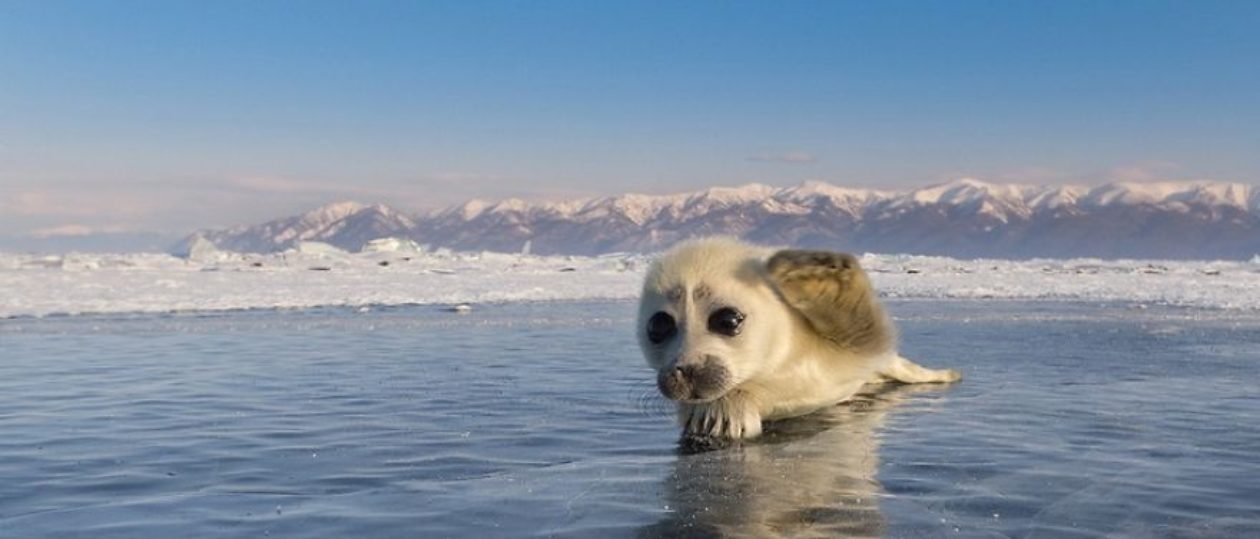
Sea_Lion_PupA couple of years ago I had the chance to sit at the Fisherman’s Wharf in San Francisco and watch the sea lions. They made me laugh with their antics. They bark very loud if one invades the other’s space yet don’t seem to mind sitting all squished in alongside one another. And they appear to delight in the attention of the humans watching them. Did you know? Approximately 300,000 sea lions live between the Mexican border and the state of Washington.

To my great dismay, I just learned that 940 young starving and dying sea lions turned up on the shores of California in the first two months of this year. This is a record. NOAA (National Oceanic and Atmospheric Administration) said that is four times the number California would typically see.

Normally, sea lions eat squid and sardines. Yet the warmer ocean is pushing those prey deeper beneath the ocean’s surface. In fact, the ocean is up to five degrees hotter. This means sea lion mothers must go further for food. And it means their pups are left alone for longer periods of time than usual. Weakened and devoid of sustenance, the pups wash ashore.

Animal rescue shelter employees and volunteers are rushing to save the sea lions. Unfortunately, they cannot save all of them. Often, they must leave some sea lions on the beach because they do not have space to take them. It is like leaving injured patients at an accident scene because there is not enough room at the hospital.

This is the third year in a row for a high number of sea lion pups to die or be stranded. The death number was so high in 2013 that experts declared it an “unusual mortality event” for the species. Perhaps you would like to donate money to a marine mammal rescue center or volunteer to help the sea lions. You can also help by reducing your carbon footprint. Make a difference, time is running out.

Polar Temperatures

Polar BearAs I write this blog, small snowflakes are raining down from a white/gray sky. I love how peaceful it can be to watch them. At the same time, a part of me is wondering how much snow I will have to shovel. The Northeast United States has had a blustery, frigid February. Maine and Massachusetts already have several feet of snow on the ground, and New York and New Jersey have been counting inches. Compare that scenario to a warmer Alaska and a lack of snow. Yes, I know, Alaska should have snow.

One of my readers asked me to talk about the weather. She said many people don’t believe global warming is happening because it is so cold outside and temperatures are about 20 degrees below normal on the East Coast. It is only February and we have already had 4,421 record high temperatures in the United States versus 737 record lows. We know weather changes from minute to minute, hour to hour, and from day to day. Yet we forget to think about average weather over time and space. Average weather over time and space is called climate. And that is very important.

Our climate has warmed considerably and it is affecting everyone and everything. It means polar ice caps are melting at alarming rates, we are losing food crops to drought, we are losing animal species, we are getting heavier and heavier downpours of rain, and we are experiencing sweltering summer heat. You might ask, why should I care about climate? For one, it is a fascinating subject. Two, we impact the climate by our actions. If we continue to warm the climate, as we do every single day, we change complex pressure and temperature mechanisms which allow us to have predictable, stable weather patterns. Our lifestyles, from what car we drive to how we eat, affect everyone and every living thing around us. Did you know, your choices affect the weather, and the climate? It is time to make changes.

Honey & Bees

OLYMPUS DIGITAL CAMERADo you like honey? I do. It is great with strawberries and is delicious all by itself. Did you know it takes about 6,000 bees visiting more than 2 million flowers to make a pound of honey? Honey is wonderful for many reasons. It helps with weight loss and improves athletic performance. It fights infection. And it has antibacterial, antioxidant, and antifungal properties. You just have to make sure you buy raw, unfiltered honey.

Bees are intimately connected to our planet and I think of them especially because the Earth Day holiday will be here before we know it. Earth Day takes place on April 22nd. In past blogs I have written about how we treat animals and the effect our actions have on them. Bees are animals too, even though most people usually lump them only in the insect category.

I am very concerned about bees because they have been dying at alarming rates over the last years. Until recently, many people did not understand why bees were dying. Harvard University researchers determined a certain class of pesticides, called neonicotinoids, is to blame. These pesticides have been banned in Europe but not in the US. Neonicotinoids can persist in the soil for more than ten years and are used on corn, soy, wheat and more. Bees are essential to us, for they pollinate our crops. Without bees, we would lose a tremendous amount of food. The next time you eat an apple, a pear, an olive, or some almonds; you can thank a bee for its hard work.

Remember that Earth Day will soon be here. Take good care of the ground beneath your feet and the plants around you. Keep your yard and work-place free of pesticides. Pesticides are harmful to the bees, your health, your children’s health, and to your pet’s health.